

Why Do Men Wear A Tattoo Of A Salamander?
Patterns and signs in Berber crafts
For centuries, Berber craftsmanship has been shaped by ancestral know-how and strong traditions that, from the countries of the Not bad Maghreb (Morocco, People's democratic republic of algeria, Tunisia, Libya, Egypt) and although different from: shapes, colors specific meanings and labels are always inspired by history, the banner of civilizations and the unique and exclusive Berber culture.
Pottery, fabrics, jewelry, carpets, article of furniture, paintings, tattoos, sculptures … each piece or painting has Berber motifs, Berber signs that always have a precise and very rich pregnant. In addition to the aesthetic and decorative attribute of objects from Berber adroitness, Berber representations, once the pregnant of symbols is analyzed, we look at this Berber art otherwise.
Berber culture: symbolism as well little known
Signs and motives take always had great symbolism for Berbers. Most of these symbols stand out for a large function of the arts and crafts products, amongst which we notice: weavings, pottery, jewelry, tattoos but as well wall decorations that oftentimes adorn rammed houses in the middle of the douars.
Much more than a decorative or aesthetic dimension, the meaning of motifs in Berber craftsmanship stipulates, on the 1 manus, history, culture, traditions, rites, beliefs and superstitions, and, on the other paw, retraces the inspirations born of the acts of life.
So, if the zigzags, chevrons, rhombuses or triangles that have crossed the ages are at present assimilated to simple geometric patterns, it is of import to know that in fact, these patterns and signs demonstrate many other meanings!
The Berber symbols are very like to those plant on some stone paintings of prehistory, as are those of ancient pottery found mainly in the Maghreb. This is why Berber fine art is frequently compared to cave art with representations worthy of the first artefacts of ancient civilizations and cultures. In these ancient times and, simply equally today in the Maghreb, men live in close relationship with nature. They accept always had a very close human relationship with their surround. Nature is so and also a very inspiring source for artistic and fabric Berber creations.
The meaning of Berber symbols, patterns and signs
The assay and profound knowledge of all the Berber motifs and signs could not be independent in a few lines. Moreover, and as a reminder, the Berber motifs and signs vary from one region to some other and according to the state, in the forms, the colors and also the belongings to the tribes etc …
It is the practice of tattooing, signified in Berber by "Ticheret, Aayacha, wachem" which is the oldest rite of Berber civilisation. As in the Berber culture, the woman is representative of the world and, of all the symbolism of the earth, 1 finds the Berber tattoos mainly on the body (easily, legs, belly, thighs) and the face (forehead, cheeks and chin) women.
These tattoos often form dots, series of dots, fairly simple decorations, straight line features, twisted lines, 5-shaped shapes, curves, cantankerous lines, geometric shapes in squares, circles, triangles and plant and animal forms.
The tattoo has dissimilar functions, beauty and aesthetics, some may mean a specific membership in a social group, others a protection confronting the evil middle or a protection against the disease, others volition be made to attract fertility as this is the case in Kingdom of morocco, when a woman wears a tattoo in the shape of a cantankerous on the foot or on the ankle.
Nowadays, henna tattoos have replaced permanent tattoos that were in one case fabricated with charcoal, kohl or other materials.
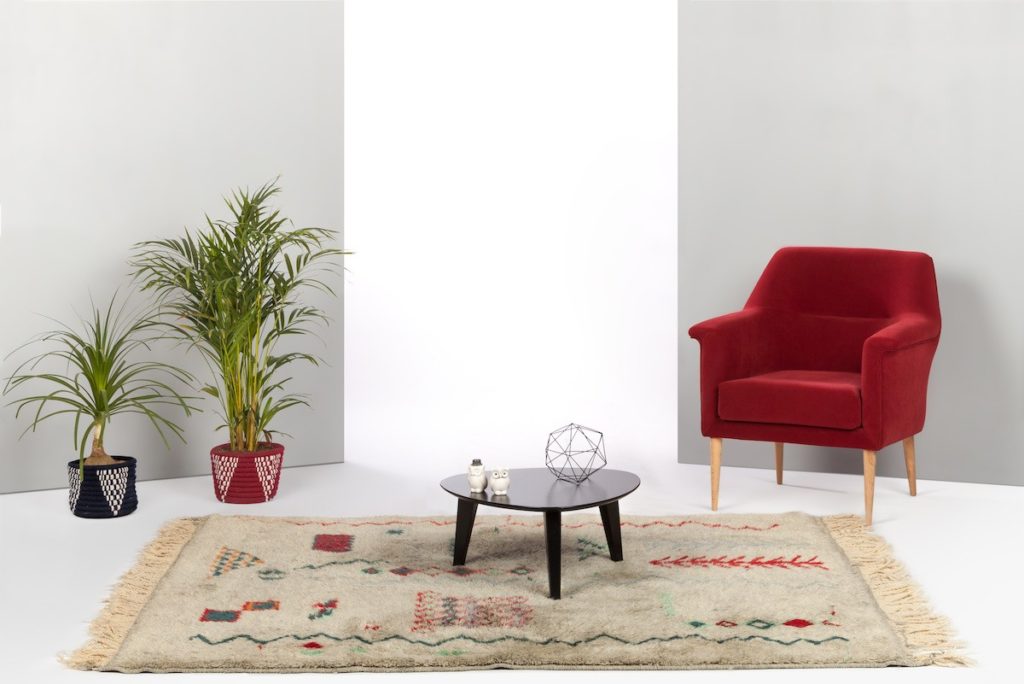
For weaving, especially the beautiful Berber carpets, we can say that near of the Berber motifs and Berber signs fabricated, ever have a family, sexual and natural connotation. The symbolism is therefore most often equated with the couple, the family and all the acts of everyday life. The Berber symbols follow the inspiration of the women who weave these books.
If nature yet remains a frequent source of inspiration, the patterns and signs nowadays on the carpets are very often alloyed:
– to the man,
– to the woman,
– to the coming together,
– when mating,
– to fertility,
– at pregnancy,
– at birth
Ainsi, pour exemple, le signe de l'accouplement est la croix + tandis que le cercle schématise, une spirale, une harmonie éternelle et un absolu. Les signes berbères masculins et féminins sont toujours distinctifs. Par ailleurs, les symboles féminins sont toujours entourés par les symboles masculins qui se caractérisent surtout par :
– des traits, des bandes, des lignes,
– des arêtes de poisson,
– des échelles…
Of course, the motif of the snake characterizes the sex of the man, the motive of the balderdash the ability and the fertility. Male patterns are also associated with the number three, so we will oft notice: three lines, three bands or 3 objects etc …
For the feminine motifs, nosotros ofttimes notice the sign Ten which schematizes the opening of the body of the woman then ready to give birth and, in the same vein, the chevron, which symbolizes the legs apart from the woman. The rhombus very present on Berber carpets symbolizes the belly and uterus of the woman, the double-hooked diamond represents birth. Weaving is a Berber art par excellence, each carpet is a unique piece, the piece of work follows the inspiration of the Berber craftswoman who often claims that "to make a rug is like making henna", this is how She continues her idea … On carpets, we frequently discover the motif of the comb to exist woven, which is the feminine symbol of fertility and inventiveness.
Among other adequately common Berber signs, in that location are:
– The female person symbol spider which schematizes the sun simply also patience, working life and harmony.
– The anchor synonymous with fidelity, inner balance and lucidity.
– The ram symbol of fertility and synonymous with complementarity and opposition.
– The olive tree symbol of the quiet and beneficent force.
– The swallow symbol of femininity and fertility.
– The lizard synonymous with peak and spiritual enlightenment.
– The salamander symbol of regeneration of growth.
– The wing symbolizes life in its ardor and vivacity and its power to multiply to infinity.
– The bee symbolizes fertility and affluence.
– The scorpion symbolizes evil, death, or else courage and endurance.
– The snail symbolizes fertility, bicycle of harvests.
– The fish is the protective Berber symbol to ward off the evil eye.
The cadger, the fish and the salamander are common motifs in Berber ornamentation, they are found more oft on jewelry, pottery. If we refer to the famous Berber fibula, it is not only a protective talisman, information technology can also signal that the girl who has worn is already promised.
For pottery, or Berber ceramics, they are shaped either by men or by women. Women'due south books, which oft represent women, the body, the rima oris, are more easily recognizable. One can likewise recognize certain motifs often reproduced in henna tattoos. Berber pottery as well contains a large number of geometric, anthropomorphic and zoomorphic symbols. patterns too evoke tattoos or jewelry. Always with a concern for protection and fertility, hither once again, signs and motives are ofttimes synonymous with the tribe, the identity of the hamlet … Today, and co-ordinate to the evolution of modernistic life, it is non Non unusual to notice pottery or jewelry that demonstrate objects or means of transport related to our more recent times, this is the example of airplanes or cars …
The Berber signs and Berber motifs and, as you will understand, demonstrate a whole code of ethical values and social norms. Berber adroitness is a truthful fine art in its own right, born from primitive art, it has distinguished itself over the centuries and continues today. All symbols carry rich ideas, philosophies, life, death, piece of work, and promise. Colors vary by country and region, just virtually used in Berber art remain ruby, black and yellow.
In conclusion, Berber adroitness is a real style of expression. Berber craftsmanship is abstract, primitive art, but it remains one of the about authentic art guided by historic period-old traditions and a language that must not be forgotten! Equally we already pointed out in the introduction, now, when you wait once again at products born from Berber crafts, we simply wish that you lot will not see them whatever more than in the same fashion!
Source: https://www.tribaliste.com/magazine/en/patterns-and-signs-in-berber-crafts/
Posted by: bennettyourron1938.blogspot.com
0 Response to "Why Do Men Wear A Tattoo Of A Salamander?"
Post a Comment